Food And Agriculture.
Feeding Ghana, then feeding the world.
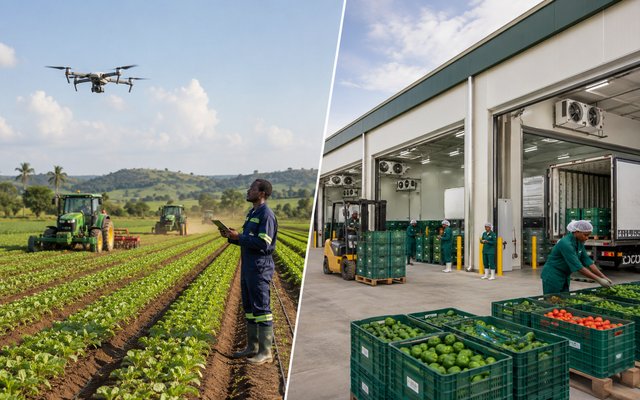
COMPREHENSIVE NATIONAL FOOD AND AGRICULTURE POLICY FOR THE REPUBLIC OF GHANA
A Futuristic Agricultural Transformation Framework
Making Ghana the Food and Agriculture Hub of Africa
“Ghana Must Feed Africa”
1. Introduction
Food is sovereignty. Agriculture is national security. A country that cannot feed itself cannot fully control its future. No nation can claim true independence when its people depend heavily on foreign food imports, when farmers remain poor, when fertile lands are underutilised, when young people run away from agriculture, when post-harvest losses destroy hard work, and when food prices determine the dignity of families.
For Ghana, agriculture must no longer be treated as a traditional rural activity. It must become a modern national economic engine, a scientific enterprise, a youth employment platform, an industrial raw material base, a foreign exchange earner, a food security weapon, a climate resilience strategy and a continental export mission.
Ghana is blessed with fertile lands, varied agro-ecological zones, rainfall diversity, water bodies, young people, hardworking farmers, access to the sea, proximity to Sahelian markets, a growing domestic population and strong potential in crops, livestock, fisheries, forestry, agro-processing and food exports. Yet the country still imports significant quantities of food it has the capacity to produce. This must change.
The Government of Ghana’s own Feed Ghana Programme identifies priorities such as increasing agricultural productivity, reducing imports, improving nutrition, increasing raw material supply to agro-industry, increasing value addition, growing exports and creating jobs and wealth. The programme also identifies twenty-two priority commodity value chains for transformation.
Planting for Food and Jobs Phase II also introduced a shift from direct input subsidy to a smart agricultural input credit system linked to structured market arrangements, with the aim of removing barriers to credit, raising productivity, stabilising food prices, promoting commercial agriculture and improving food security, resilience and exports.
This policy builds on those foundations but moves further. It proposes a futuristic agricultural revolution that will make Ghana not only food secure, but food powerful. Ghana must produce enough to feed itself, process enough to industrialise, export enough to earn foreign exchange, and lead enough to feed Africa.
The central philosophy is simple:
Ghana must move from farming for survival to farming for sovereignty, industry, wealth and continental leadership.
This policy proposes the reintroduction of modern state farms, not as inefficient political farms of the past, but as professionally managed, technology-driven, commercially disciplined, regionally specialised and publicly accountable agricultural production estates. These state farms shall work alongside private farmers, commercial farms, cooperatives, youth farms, women-led farms, farmer-based organisations, traditional authorities, universities, research institutions and agribusiness investors.
The future of Ghanaian agriculture must be built on a complete food system, not only production. It must include land, water, seeds, machinery, finance, extension, storage, roads, processing, packaging, standards, exports, insurance, research, technology, climate resilience, farmer welfare, food reserves, school feeding, nutrition, livestock, fisheries, aquaculture, mechanisation, irrigation, youth participation and market access.
Ghana must become the country that grows food, processes food, stores food, brands food, exports food and feeds Africa.