Tourism and Eco-Culture.
Heritage, nature, culture, and hospitality turned into sustainable prosperity.
COMPREHENSIVE NATIONAL POLICY ON TOURISM AND ECO-CULTURE
Republic of Ghana
A New Ghana Agenda for Tourism, Heritage, Nature, Identity and Sustainable Prosperity
1. Introduction
Tourism is no longer merely about visiting places. In the modern world, tourism has become one of the strongest instruments for national branding, job creation, cultural diplomacy, foreign exchange generation, environmental conservation, community empowerment, youth employment, creative arts development, infrastructure growth, and global identity.
For Ghana, tourism must not be treated as a secondary sector. It must become a central pillar of national transformation. Ghana is a country blessed with history, culture, music, food, festivals, forests, wildlife, rivers, lakes, beaches, mountains, traditional kingdoms, sacred sites, forts, castles, warm people, political stability, spiritual heritage, and a powerful Pan-African identity. Yet the full economic, cultural, and diplomatic potential of Ghana’s tourism industry remains underdeveloped.
The time has come for Ghana to build a tourism economy that goes beyond occasional visits, festivals, beaches, castles, and hotels. Ghana must create a complete tourism ecosystem; one that connects culture, ecology, hospitality, transport, digital technology, investment, education, security, sanitation, entertainment, sports, arts, local enterprise, and community development.
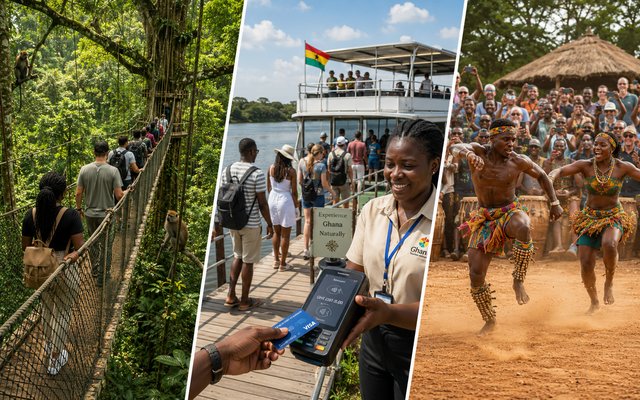
This policy proposes a comprehensive national framework for Tourism and Eco-Culture as a strategic development agenda for Ghana. Eco-culture refers to the intelligent connection between environmental sustainability and cultural identity. It recognises that Ghana’s forests, water bodies, sacred groves, wildlife, beaches, mountains, traditional settlements, festivals, food systems, music, dance, language, crafts, architecture, and communal values are not separate assets. They are one living national heritage.
A serious tourism policy for Ghana must therefore protect nature, celebrate culture, empower communities, attract investors, improve infrastructure, preserve heritage, create jobs, and project Ghana as a world-class destination.
Under this policy, tourism shall be treated as a national development instrument, not merely a leisure activity. It shall be used to create employment for the youth, develop rural communities, strengthen Ghana’s international image, promote national unity, preserve cultural heritage, protect the environment, and generate sustainable revenue.
The policy is founded on one central belief:
Ghana must not only be a place people visit; Ghana must become an experience the world never forgets.